
Granite Stain Removal: Conservative Treatment and Escalation
This guide addresses granite stain as a practical decision guide.
What a granite stain decision actually covers
The phrase granite stain looks simple, but it can describe several different decisions. A reader may be asking for a planning estimate, a material comparison, a repair method, or a maintenance schedule. This guide separates those meanings before giving a recommendation. That distinction matters because a price question should not be answered with a catalog number, and a stain question should not be answered with a sealer advertisement. The useful output is a documented next step that fits the actual slab, finish, location, and condition.
Identify the mark before treating it
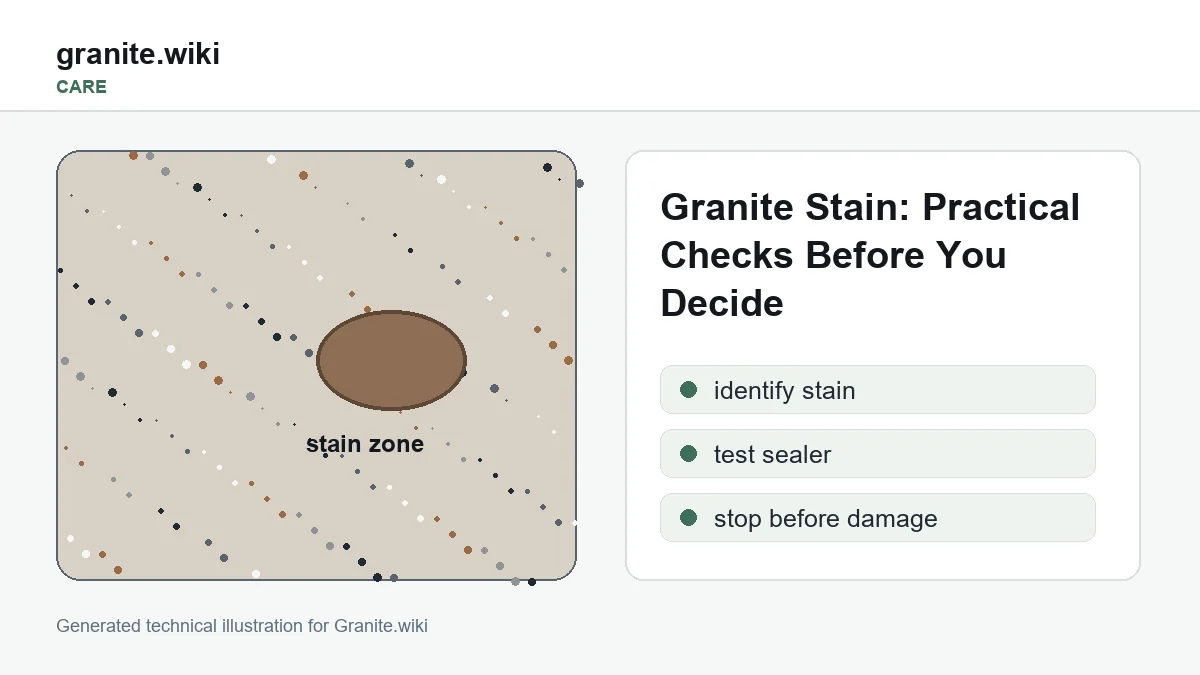
For granite stain, begin with a controlled inspection. Note color, location, size, edge sharpness, odor, texture, exposure to water or oil, and whether the mark changes when wet. A stain may be absorbed residue, surface film, hard-water deposit, rust-like discoloration, organic material, or damage to the finish. Etching and dullness are not the same as a stain. Photograph the area before treatment and test any method on an inconspicuous spare piece when possible.
Conservative treatment sequence
Remove loose material, clean with a product approved for the stone and finish, rinse, and dry. Do not mix chemicals. Avoid acids, abrasive powders, aggressive scraping, and improvised solvents unless the stone-care professional or product documentation specifically supports them. If the mark remains, document the product used and the result before trying another approach. Repeated treatment can spread an oil, alter a finish, or create a larger visible patch.
When repair is professional work
Escalate when the stain is deep, the surface is etched, a seam or edge is damaged, a crack is present, the stone is historic or high-value, or the treatment could affect a large visible area. A restoration professional can distinguish cleaning from honing, polishing, poulticing, resin repair, or replacement. The goal is not to make every mark disappear at any cost; it is to choose a controlled method that does not create a more difficult repair.
Evidence boundaries
Granite is a natural stone, and a commercial name does not identify one universal quarry, mineral balance, finish, thickness, or performance profile. A photograph can show appearance under one light. A supplier sheet can describe a product line. A laboratory report can support a measured property for a defined sample and method. None of those sources should be silently expanded into a promise about every slab. The safest wording keeps observation, source-backed fact, estimate, and professional judgment separate.
Which project variables change granite stain?
The answer changes with slab selection, layout, cutouts, edge details, thickness, access, region, labor market, finish, backsplash, sink type, support, sealing history, and the condition of the existing surface. Two projects with the same nominal square footage can require different fabrication time and produce different waste. Two stains that look alike can respond differently because one is oily, another is mineral residue, and another is etching or finish damage. Record the variables before comparing offers or treatments.
Compare granite stain using the same scope
Use this table only after defining the material, finish, dimensions, condition, and work included. The middle column explains why the item changes the decision; the final column identifies the evidence that makes two options comparable.
| Question to record | Why it changes the decision | Evidence to request |
|---|---|---|
| What exact stone or surface is involved? | Names are not always unique. | Slab photo, lot, supplier record |
| What finish and thickness are planned? | Finish affects appearance and care; thickness affects fabrication. | Quote and specification |
| What is the measured area or affected zone? | Area drives material, labor, and treatment scope. | Field measurement or sketch |
| What condition is already present? | Damage, seams, access, and old sealer change the work. | Photos and inspection notes |
| What is the stop rule? | Some work needs a fabricator or stone-restoration professional. | Written escalation point |
How to build a decision record
Keep the URL or query that started the research, the date checked, the exact product or slab name, the supplier, the finish, the dimensions, photographs, the source documents, and the assumptions used in any estimate. If a contractor changes the material or scope, update the record rather than carrying forward the old conclusion. A short dated record is more useful than a confident sentence detached from the actual project. It also makes later repair, replacement, and warranty conversations easier.
Common mistakes
The most common mistake is treating a broad internet answer as a quote or diagnosis. Other errors include comparing a material-only price with an installed price, using square footage without allowing for cutouts and waste, applying a cleaner before identifying the stain, sealing because a calendar says so without testing absorption, and assuming a similar-looking slab has the same technical data. Another mistake is allowing a repeated trade name to replace the actual lot, finish, and supplier record. Each shortcut can make the page sound decisive while making the real decision less reliable.
Next action for granite stain
Start with one exact sample, surface, or project drawing. Write down the dimensions and the decision being made. Gather two or more comparable documents using the same scope. Mark which facts are verified and which are estimates. Then ask the installer, fabricator, supplier, or restoration professional the narrow question that remains. If the evidence does not answer the question, say so and stop rather than filling the gap with a generic claim.
Query-specific focus
A singular stain query needs a stop rule. If gentle cleaning does not change the mark, if the finish becomes dull, or if the mark is near a crack or seam, stop experimenting and document the condition for a restoration assessment.
General Amazon retail reference
Consumer stone cleaners, stain treatments, poultice ingredients, and small repair kits are often sold as packaged products. For early planning, use about $15–$40 per small cleaner, treatment, or repair kit as a general retail band, then check the exact product and coverage. This amount does not include professional restoration, honing, polishing, resin work, replacement, or the cost of testing an unknown stone.
This is a general U.S. retail reference, not a treatment guarantee. Region, seller, brand, package size, stain type, finish, special stone variety, shipping, tax, and promotion can change the price. Follow the product label and the stone-care professional’s advice; never select a chemical only because it is cheaper.
Related Granite References
Use these references to move from the query-level decision to the material, color, or mineral context that supports it. Return to the project-specific scope before acting.
- granite countertop guide
- granite color guide
- granite entity reference
- quartz reference
- feldspar reference
Sources and review notes
- USGS: Components of Igneous Rocks
- Natural Stone Institute: Care and Cleaning
- Natural Stone Institute: Sealing Stone
- Amazon granite sealer search
- Amazon granite countertop search
Confirm current supplier documents, local scope, product instructions, and professional advice before acting. Claims about a specific slab, price, installation condition, or stain require evidence tied to that project.
Leave a Reply